

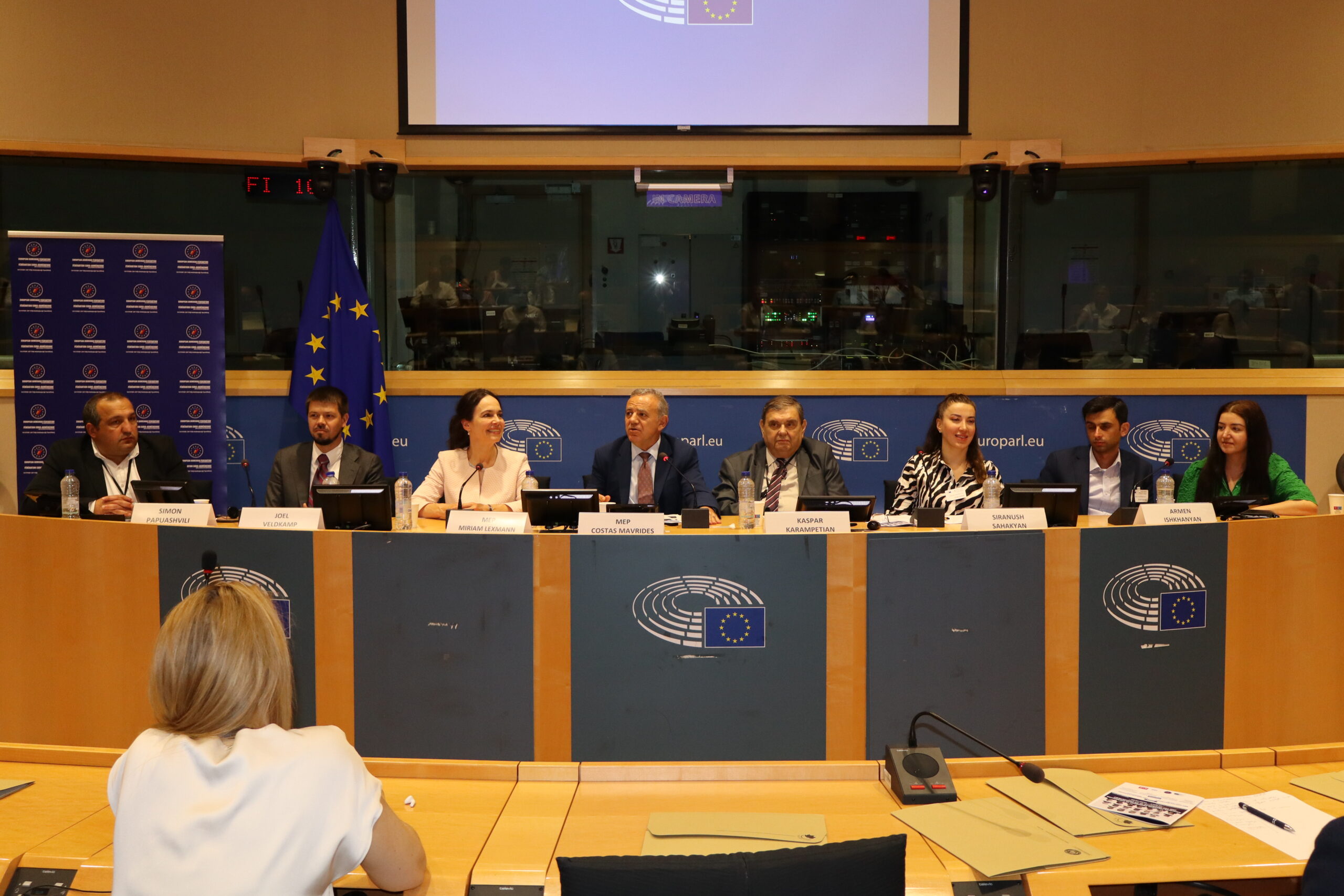
Members of the European Parliament, legal experts, human rights advocates and family members of Armenian detainees gathered today in the European Parliament for a conference entitled “Armenian Political Prisoners in Azerbaijan and the Imperative of EU Engagement.” Co-hosted by MEPs Costas Mavrides and Miriam Lexmann and organized with the support of the European Armenian Federation for Democracy and Justice (EAFJD), the event focused on the continued detention of Armenian prisoners of war and political detainees in Azerbaijan, and the role the European Union can play in securing their release.
Speakers examined the humanitarian, legal and political dimensions of the issue, arguing that the continued detention of Armenian captives undermines both international law and prospects for lasting peace between Armenia and Azerbaijan.
The conference began with MEP Costas Mavrides reaffirming the European Parliament’s firm position, which he states “overwhelmingly” calls for the immediate release of the detained Armenians and reminded the European Commission of its mandate to make such demands, as is stated in multiple EP resolutions, and the necessity to scrutinize the Energy agreements between the EU and Azerbaijan through the lens of international law and human rights. He shared the frustration many in the audience expressed that the geopolitical considerations of the Executive have overshadowed both the will of the European Parliament and the values that are foundational for the European Union. MEP Miriam Lexmann further added that the continued deepening of relations between the EU and Armenia provides avenues for the Commission to take the lead on this issue. Drawing from her personal experience as a representative who was born in Slovakia, she stated that the issue of political prisoners should be met with outmost priority and should not be jeopardized.
Representing the families of those detained, Armen Ishkhanyan, the son of imprisoned former Nagorno-Karabakh parliament speaker Davit Ishkhanyan, spoke about the impact of his father’s imprisonment. He explained that his father remained in Artsakh during the 2023 forced displacement of the Armenian population to help ensure the safe evacuation of civilians before being arrested by Azerbaijani authorities. Since then, he has been sentenced to life imprisonment following what human rights advocates have described as a politically motivated trial.
Reflecting on more than 1,000 days of separation, Ishkhanyan described the emotional toll the imprisonment has taken on his family. Recalling a conversation with his daughter, he said:
“When I asked her what she wanted as a birthday present, she simply answered: ‘I want my grandfather to come home.'”
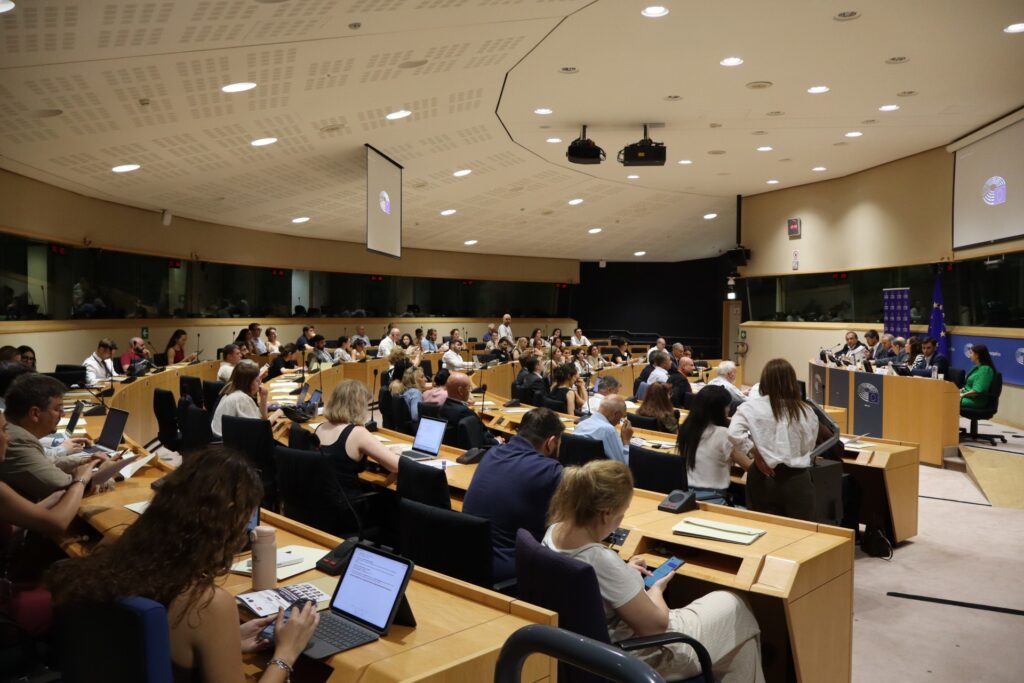
The conference also examined the legal implications of the detainees’ continued imprisonment. Human rights lawyer Siranush Sahakyan, who represents several of the Armenian prisoners at the ECHR, argued that the cases have significance well beyond the individuals concerned.
“The unlawful detention and convictions of Armenian prisoners are not merely a human rights issue, but a defining test of Europe’s ability to uphold the rule of law and the international legal order. While the European Parliament has adopted strong resolutions, they must now be matched by effective political action. Otherwise, impunity will become the norm tomorrow.”
Simon Papuashvili, Programme Director for Eastern Europe and the South Caucasus at the International Partnership for Human Rights (IPHR), said that the release of the detainees should be treated as a prerequisite for any credible peace process.
“Peace cannot be credible while Armenian captives remain imprisoned in Azerbaijan. Their immediate and unconditional release is not a side issue but a basic humanitarian obligation and a necessary foundation for any genuine peace process. Justice, trust and reconciliation must begin with bringing every captive home safely and without delay.”
Joel Veldkamp, Director of Public Advocacy at Christian Solidarity International (CSI), argued that the issue also carries broader strategic importance for Europe.
“A strong Armenia could be a helpful ally to the European Union, as it seeks to navigate an era of growing Turkish influence and weak international norms. In order to empower Armenia, European policymakers would be prudent to look for ways to make the Armenia-Azerbaijan peace process less lopsided.
Intervening for the twenty Armenian hostages in Baku would be an excellent place to start.”
Speakers throughout the conference called on the European Union to move beyond statements of concern and use the diplomatic and political tools at its disposal to press for the immediate release of the detainees. They argued that the continued imprisonment of Armenian political prisoners and prisoners of war remains a major obstacle to confidence-building and to a durable peace in the South Caucasus.
The conference concluded with a shared appeal for EU institutions to intensify their engagement with Azerbaijan and make the release of all Armenian detainees an immediate priority.